
Facility Management Course vs HSE Course – Which Is Better?
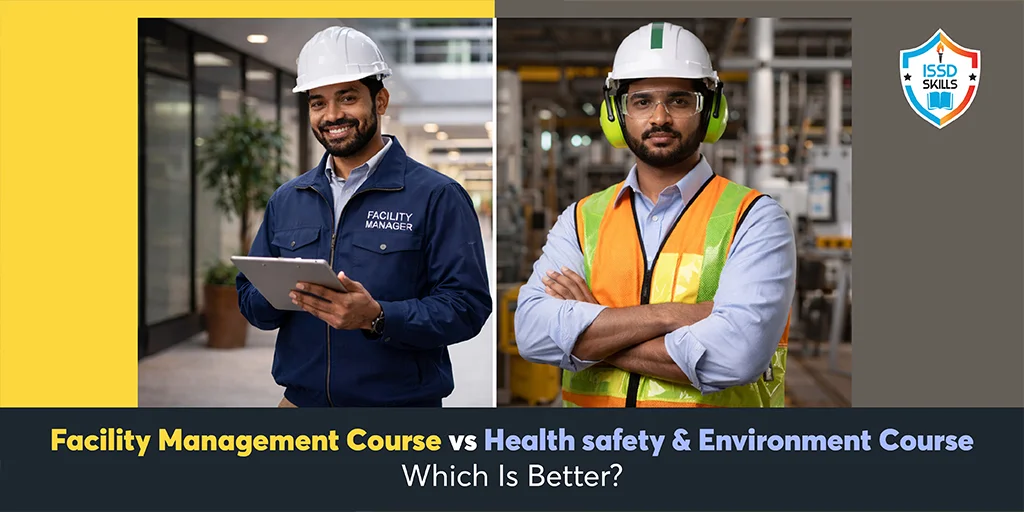
Choosing the right professional course can be challenging, especially when two options offer strong career opportunities. Many students and working professionals often compare Facility Management courses and HSE (Health, Safety, and Environment) courses before deciding which path to take.
Both fields are growing rapidly and offer excellent career prospects across industries such as construction, healthcare, oil & gas, manufacturing, corporate infrastructure, and facility operations. However, the roles, responsibilities, and skill sets required in each field are different.
In this guide, we will compare Facility Management Course vs HSE Course, including course scope, career opportunities, industry demand, and job roles, so that you can choose the program that best fits your career goals.
A Facility Management course focuses on managing buildings, infrastructure, and workplace operations efficiently. Facility managers ensure that organizations run smoothly by maintaining infrastructure, supervising services, and managing resources.
Professionals trained in facility management handle operations such as:
- Building maintenance
- Vendor and contract management
- Housekeeping and security supervision
- Asset and inventory management
- Energy management
- Workplace safety coordination
Because modern workplaces are becoming more complex, companies are increasingly hiring trained professionals with facility management certification.
Many students searching for facility management course online, facility management diploma course, or integrated facility management training choose this field because it offers opportunities across multiple industries.
What Is an HSE Course?
An HSE course (Health, Safety, and Environment) focuses on workplace safety, risk management, and environmental protection. HSE professionals are responsible for ensuring that organizations follow safety regulations and protect workers from hazards.
An HSE officer or safety professional typically works in industries where safety risks are higher.
Key responsibilities include:
- Conducting safety audits
- Implementing workplace safety policies
- Risk assessment and hazard identification
- Environmental safety management
- Emergency preparedness planning
- Ensuring compliance with safety regulations
Because safety compliance is mandatory in many industries, professionals with HSE certification courses are in high demand.
Students often search for HSE course with international certification, safety officer course, or occupational health and safety training when exploring this career path.
Understanding the difference between these two courses can help you choose the right career direction.
Aspect | Facility Management Course | HSE Course |
Focus | Building operations and infrastructure management | Workplace safety and risk prevention |
Main Role | Managing facilities, services, and workplace operations | Ensuring safety compliance and hazard control |
Work Environment | Corporate offices, hospitals, malls, airports, residential complexes | Construction sites, oil & gas, factories, industrial environments |
Career Path | Facility manager, operations executive, maintenance manager | Safety officer, HSE supervisor, safety auditor |
Skill Focus | Operations management, maintenance, vendor coordination | Risk management, safety audits, compliance |
Both fields are important for modern organizations. In many workplaces, facility managers and HSE officers work together to ensure safe and efficient operations.
Both facility management careers and HSE careers are growing because of rapid infrastructure development and increasing safety regulations.
Facility Management Industry Growth
The demand for facility management professionals is increasing due to:
- Expansion of IT parks and corporate campuses
- Growth of hospitals and healthcare infrastructure
- Development of airports and metro stations
- Increase in residential and commercial complexes
Because of these developments, trained professionals with facility management certification courses are required to manage large infrastructure systems.
HSE Industry Growth
The HSE sector is expanding because companies must follow strict safety regulations. Industries such as:
- Oil and gas
- Construction
- Manufacturing
- Power plants
- Chemical industries
require certified HSE officers and safety professionals to maintain workplace safety.
This makes HSE certification courses a strong career option for those interested in safety management.
Career Opportunities After Facility Management Course
Students completing a facility management diploma or certification course can explore several job roles such as:
- Facility Manager
- Facility Supervisor
- Maintenance Manager
- Operations Executive
- Building Services Coordinator
- Infrastructure Manager
These professionals are hired in sectors including:
- Corporate offices
- Hospitals
- Shopping malls
- Airports
- Hotels and hospitality industry
- Residential communities
Because every large building requires facility operations, facility management jobs are available in many industries.
Career Opportunities After HSE Course
Graduates of HSE courses can work in safety-related roles across industrial sectors.
Common job roles include:
- HSE Officer
- Safety Officer
- Safety Supervisor
- Environmental Health and Safety Executive
- Safety Auditor
- Risk Management Officer
These professionals are typically hired in industries such as:
- Construction
- Oil & Gas
- Manufacturing
- Heavy engineering
- Infrastructure projects
Because workplace safety regulations are mandatory, the demand for trained safety officers and HSE professionals remains strong.
There is no single “better” course between these two. The right choice depends on your career interests, educational background, and preferred work environment.
Choose Facility Management If You Prefer:
- Managing buildings and infrastructure
- Working in corporate environments or hospitals
- Coordinating operations and services
- Supervising facility teams and vendors
Facility management is ideal for those interested in operations management and infrastructure coordination.
Choose HSE If You Prefer:
- Workplace safety and risk prevention
- Industrial environments such as construction or manufacturing
- Conducting safety audits and compliance checks
- Working in safety-focused roles
HSE is a good option for those passionate about occupational health and safety management.
When choosing a course, it is important to select an institute that provides recognised certification and industry-relevant training.
Programs offered by International School of Skill Development are certified by TÜV SÜD, a globally recognised certification body known for maintaining international quality standards.
Because of this certification, students receive international-level training aligned with global industry requirements.
Both Facility Management courses and HSE courses offered through ISSD focus on:
- Industry-relevant curriculum
- Practical knowledge and professional skills
- Training aligned with international standards
- Career-oriented learning through live online sessions
This helps students prepare for real-world roles in facility operations and safety management.
Flexible Learning Options for Students and Professionals
Another advantage is the online learning format, which allows students and working professionals to attend classes from anywhere.
Through live online sessions, candidates can gain professional training without relocating or leaving their current jobs.
This makes the courses suitable for:
- Plus Two completed students
- Diploma and engineering graduates
- Working professionals seeking career advancement
- Individuals planning a career switch
Both Facility Management courses and HSE courses offer excellent career opportunities in growing industries. The best choice depends on your personal interests and the type of work environment you prefer.
If you enjoy managing infrastructure, coordinating operations, and working in corporate or healthcare environments, a Facility Management course may be the right choice.
If you are passionate about workplace safety, risk prevention, and compliance management, an HSE course could be a better fit.
Since both fields are essential for modern organizations, professionals trained in facility management and HSE will continue to be in demand across industries.
Choosing the right program from a recognised institute such as International School of Skill Development can help you gain international-standard training, professional certification, and the skills needed to build a successful career in either field.